

Book One · hardcover in production
Number Three
The pipe in the corner, and the first thirteen ways of using it.
13 stories8.5 × 8.5 in square hardcoverPremium colour · matte cover
Explore this bookIn the tall house Tocko lived Pim —
One stair squeaks. A pipe ticks. A whole house is waiting to be heard. Join Pim and Hod in fifty-two read-aloud stories that turn everyday sounds into games.
Four places. Four sounds. Can you find where each one lives?
Play with sound, or use the written clues. Take your time.


One of us does the push and one of us does the lift, and nobody gets to do both halves.
Read this story
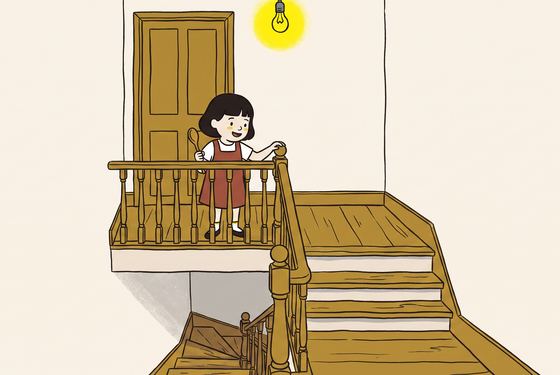
Get to the top before the two-at-a-time one goes past you, and you get to hold the roof door.
Read this story
One meter down here ticks faster than all the other eleven, and I have to say out loud whose flat it belongs to, and be right.
Read this storyMeet Pim and Hod. Hear the pipe, find the fast meter, and try the two-tap game together.
Press play to begin. Turn music off whenever you like; the narration and story sounds keep playing. Captions are available in the player.
A stair squeaks. A pipe ticks. In Tocko, little sounds open a whole world.
Meet Pim, her wooden spoon, and Hod from upstairs. Four books. Fifty-two complete stories, made to read aloud with children aged three to six.
In Cold Pipe, Pim taps and listens. Too soon. The hum swallows her next tap. So she waits, and tries again.
Eleven meters tick slowly in the Under. One ticks fast. Can you hear the difference? That's a guessing game.
Reading together is part of the game. Pause at the question. Let your child guess. Join in with the repeated words. There is room to be wrong, and try again.
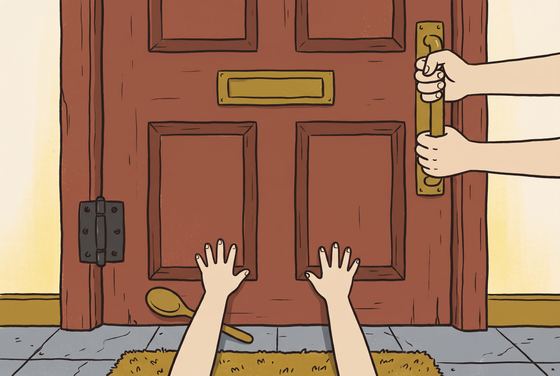
And every story ends the same way. Two taps on something hard. Then stop. And wait.
A small moment for noticing. Listening. Taking turns. Time to give one sound, and one another, your attention.
Choose a book. Start anywhere. Try a free story at Tocko dot online. The house is waiting.
Narrated with OpenAI’s synthetic Marin voice. Original music by TOCKO.
Recorded sound credits (CC0): Hollow Metal Pipe Hits by Zott820; Objects_WoodCreak_1.wav by SilentStrikeZ; R20-16-Mechanical Clock Tick-Tocks.wav by craigsmith; Wood Knock by Mrguff. Edited and mixed for Tocko.
Take the little animations with you: Pipe action GIF · Fast meter GIF. GIFs are silent.
A pipe can sing. A meter can keep time. Turn the sounds from the stories into a little music of your own.
Come into the Sound Room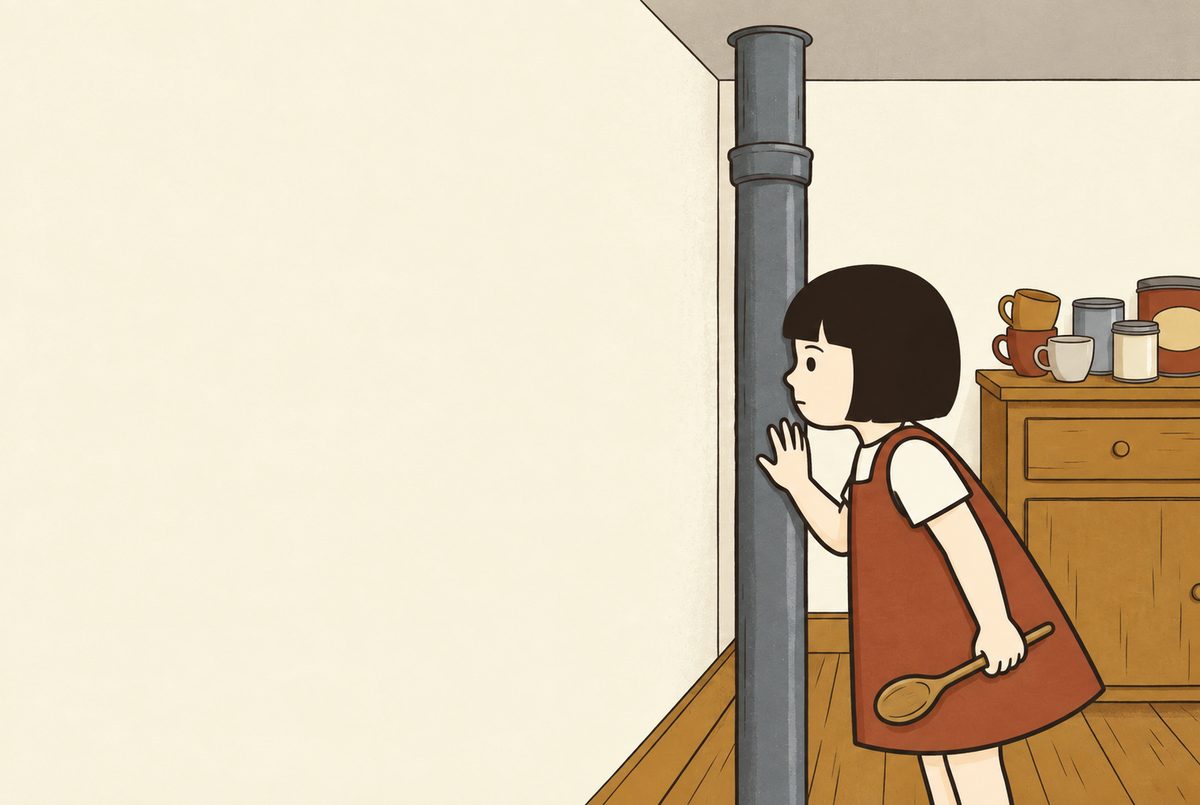
Two taps, then a little patience. Every Tocko story ends with this game. You can play it right here.







Two taps.
Every one of the fifty-two ends the same way. Tap twice on the nearest hard thing, then stop and wait.
Tap twice. Then wait.
The whole story, including its game and ending. Listen with Wren Ashby’s synthetic narration, or read at your own pace.
Four complete free stories, illustrated views, optional quiet music and the words beside you. Sound starts when you press play.


Nothing carries over between them, so there is no wrong one to start with. Each illustrated 8.5 × 8.5 in edition has a Premium colour interior and matte hardcover. The editions are in production; orders are not open.
The pipe in the corner, and the first thirteen ways of using it.
The courtyard, the lemon tree, and a voice that comes back exactly once.
Push and lift, together, or nothing — and the quietest place in Tocko.
Twelve meters that tick, one faster than the rest, and a boiler that breathes.
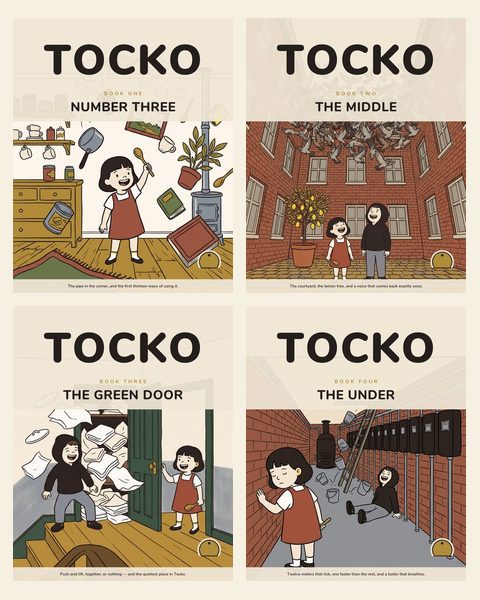
Fifty-two stories, four illustrated square hardcovers in production. One complete story from each book is free to read and hear.
Try four free storiesBook one, story one. Pim taps a pipe and a boy she has never met taps back, and that is the first tapper on the board.
The Quiet Stories invert the arc: no crisis, nobody loses, and the progress chant runs backwards. They are the ones built for the end of the day.
The stories where Hod from upstairs wins outright. He can be perfectly still or completely out of control and nothing in between, and these are the second kind.
Some games are lost. Losing a game you made up yourself is an ordinary Tuesday, and these sit with that instead of fixing it in the last line.
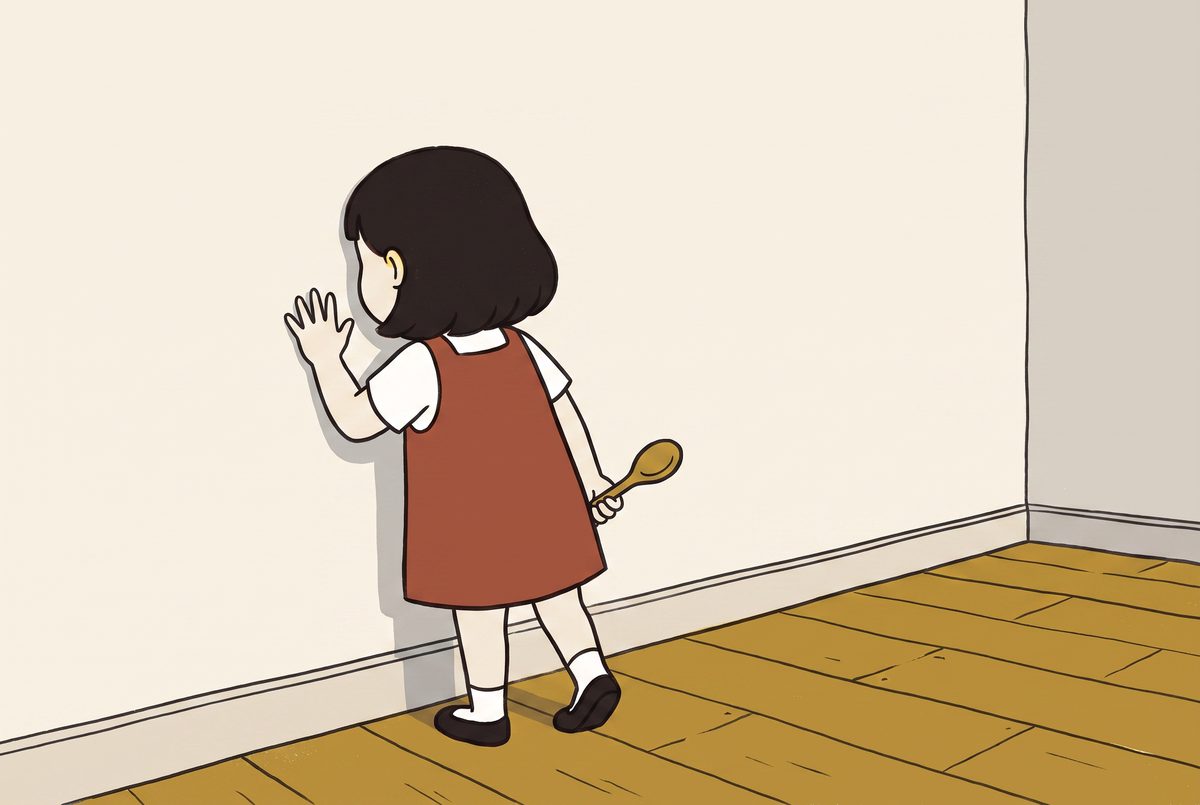
It has two roles, which is why it travels. One child taps and waits; somebody else is the building and answers. It works in a supermarket queue, through a shut door, and across the back seat of a car. A two-year-old with no words at all can play it.
Nothing in it needs the book to be open.
The house does something ordinary. Pim turns it into a game. Try it in three little steps.
The cold pipe goes up through Number Five's floor.
28 fixed facts about one building, crossed with 8 kinds of rule a four-year-old invents. That is 224 games before anybody finds a new fact — and every story finds one. 52 cells are spent.
A child who has heard three of these knows exactly where they are in the fourth. That is not a limitation to apologise for. It is the whole reason a three-year-old can join in on the third line.
Pim is already moving by the eighth word.
What she is after, and the fixed fact standing in the way.
The rule, said out loud, and the first honest attempt.
Somebody else has a go, usually worse and much louder.
The building does something nobody expected.
Pim goes back over it in her head and hears what it meant.
Who won, who lost, and the tapper goes on the board.
Two taps, and wait for the tock.
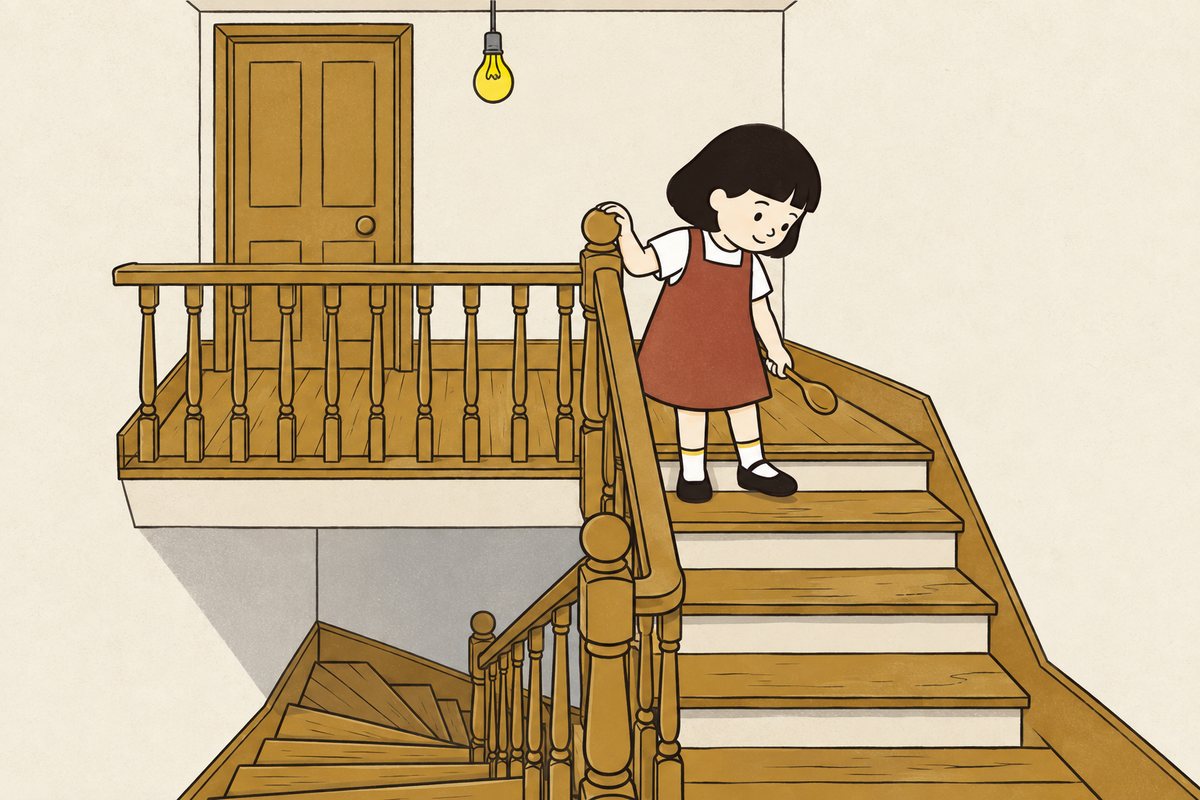
Story 2, The Eleventh Stair.
Four illustrated 8.5 × 8.5 in square editions, with Premium colour interiors and matte covers. Prices, final page counts and delivery details will be confirmed before orders open.
One complete story from each book is free to read and hear here. The square hardcover editions are in production.
About the edition
Fifty-two complete read-aloud stories for children aged 3–6, in four illustrated square hardcover editions in production. A four-year-old called Pim finds one fixed fact about the building she lives in, makes it the rule of a game, and plays it until somebody wins or somebody loses.
Most of them hand a child a neutral world and ask them to imagine over the top of it — a chair becomes a hotel. Tocko goes the other way. The stair does not become a mountain. It stays a stair, and the game is about the stair being a stair.
No, and the arithmetic is published. There are 28 fixed facts and 8 rule-types, which is 224 cells before a single new fact is found. One new fact is found per story, so the grid grows eight times faster than it is spent. 52 of the 224 cells are used.
3–6, read aloud. The sentences are short enough for a three-year-old to join in on, each story has one line that comes back three times so they can, and the jokes are built so an adult reading one for the ninth time still gets something. Most children stop needing an adult somewhere in the sixes, which is where the series stops aiming.
Yes. The square hardcover editions use full-bleed illustrated scenes, with open space for the read-aloud words. The pictures stay with Pim and what she can see. They leave the hidden sounds hidden: nobody gets to peek behind the door on Eleven.
Yes. Each book has thirteen complete stories and nothing carries over. The square hardcover editions are in production; ordering has not opened.
Every story ends the same way: tap twice on the nearest hard thing, then stop and wait. It has two roles, which is why it travels — one child taps and waits, and somebody else is the building and answers. It works in a supermarket queue and through a closed door, and a two-year-old with no words at all can play it.
No. Nobody is hurt, nothing is broken, and nothing chases anybody. The loudest thing that happens is a bin lid.
Four complete stories, one from each book, are free to hear and read on this site. The remaining audiobooks and any digital-edition terms will be announced separately.
Prices and delivery details will be available when the hardcover editions are ready to order. For now, four complete stories are free.
The retail return policy will be stated before orders open.


